
Spielberg’s Disclosure Day: Entertainment or Conditioning?
Does the sudden intersection of congressional hearings and cinematic "reveals" suggest a shift from government secrecy to psychological and spiritual conditioning?
12/17/20255 min read
When that trailer dropped, it didn’t feel like a "what if" scenario, it felt like a warning shot. It stoked the flames of anxiety in a divided nation, forcing us to visualize a reality we had all been quietly dreading.
This concept has been around for decades, ever since the CIA revealed Operation Mockingbird during Congressional testimony, confirming their access to Hollywood and their ability to shape public perception through media.
With those truths in mind, I was blindsided today by a trailer that makes Civil War look like child's play.
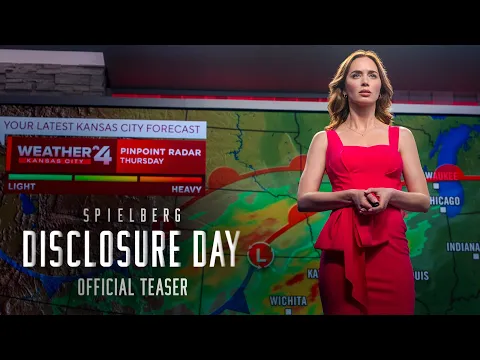
Steven Spielberg is back, and his new film is titled "Disclosure Day."
The Target Audience (It Isn’t Us)
Before digging into the film itself, we have to be honest about who this messaging is actually for.
It’s not for people like me. If you operate in the circles I do, digging through ancient texts, listening to alternative podcasts, and questioning the narrative... the concept of "disclosure" isn't new. We’ve been talking about Nephilim, Fallen Angels, Antarctica, and government cover-ups for years. We don't need a movie to tell us the world is stranger than we were taught.
This movie is for the "Normies."
It is for the millions of people whose entire reality is constructed by the 5 o'clock news. If the anchor doesn't say it, it isn't real. They live in a world where the government is transparent, history is linear, and anomalies are just weather balloons.
These are the people who doubted the effectiveness of Ivermectin until they saw it on FOX News. The people who claimed the vaccine was 95% effective simply because a talking head in a suit told them so. They are the ones who need to be managed. They are the target.
The Gradual Softening
This is where the true nature of Predictive Programming comes in. People dismiss the term because they imagine a smoky room where generals hand classified scripts to directors. That’s too clumsy.
Real predictive programming is much simpler and far more plausible. It is the gradual normalization of ideas through culture, imagery, and story, long before those ideas are ever presented as real.
Films don’t predict the future. They train emotional familiarity.
They lower the "shock threshold." They make the unthinkable imaginable. Civil War didn’t invent political fracture; it took an existing tension and gave it narrative weight. Viewers didn’t leave believing a civil war was scheduled. They left having already experienced one psychologically.
Leave the World Behind proved just how Americans would react during an apocalyptic event: No clue what to do. Constantly checking their phones for instructions from authority. Doubting the very possibility that anything could permanently alter the trajectory of their comfortable existence.
Spielberg is doing the same thing here. He isn't making a movie for the tin-foil hat crowd. He is offering a dress rehearsal for the Normie psyche. He is allowing them to experience the "reveal" in the safety of a theater, so that if (and when) the real thing happens, they don't panic... they just feel a strange sense of déjà vu.
The Timing is No Accident
When I say this movie blindsided me, I wasn't exaggerating. I didn't even know this movie existed until today.
I’ve been too busy listening to the real disclosure conversation... the hearings, the whistleblower testimony, and commentary from people like Timothy Alberino, Clif High, and others. Everyone has been discussing the recently released Age of Disclosure documentary, but not once has this Spielberg film been mentioned in those circles.
On top of that, the conversation in the real world has shifted from "Do they exist?" to "When will they tell us?"
Then, out of nowhere, YouTube serves me a trailer for a movie that depicts exactly that. Not an invasion. Not a war. But a reveal. The tagline? "All Will Be Disclosed."
It mirrors the exact language being used in Washington right now. It feels like a convergence. Two independent streams... the political reality and the cultural narrative, intersecting. When the government starts softening the language on UAPs and Hollywood drops a blockbuster about the exact same process at the same time, you have to ask: Is Spielberg just capitalizing on the zeitgeist, or is he the chosen messenger to prepare the masses for an ontological shock?
A Shift in the Narrative
Twenty-five years ago, during the height of The X-Files, the narrative was defined by secrecy. The government was the villain because they were hiding the truth. The "Smoking Man" was the archetype of power. If you talked about aliens then, you were fringe.
Today, the script has flipped. The secrecy is evaporating. We have "soft disclosure" happening on the nightly news, and yet, the public reaction is a collective shrug. We are being desensitized.
But the Disclosure Day trailer suggests the apathy is about to end. What caught my eye wasn't the spaceships or the special effects... it was the people. There are shots of terrified crowds clutching rosaries, falling to their knees, and looking to the sky not with wonder, but with spiritual confusion and terror.
Spielberg seems to be asking the question: What happens to your God when the sky opens up?
The Spiritual Deception
This brings me to the uncomfortable intersection of faith and the phenomenon.
In my late teens and 20s, listening extensively to Coast to Coast AM, I viewed the world through a strict dichotomy: It was either God or Aliens. The existence of one seemed to cancel out the other. Both the Bible and the UFO abduction stories could have been referring to the same entities existing outside of our realm of understanding, but there was no room for both simultaneously in my mind.
It wasn't until I watched M. Night Shyamalan’s Signs that I saw a third option. A single line changed my perspective. When the alien footage appeared on the nightly news, and the anchor said, “God help us all,” it sparked something in me. The man, although a fictional character, clung to faith rather than questioning the existence of it.
If you’ve been paying attention to the way Hollywood operates lately, you might have felt a shift. It’s no longer just about escapism; it feels like preparation.
We saw the internet set ablaze when Leave the World Behind debuted on Netflix. Then came Alex Garland’s Civil War.
That movie cracked the door open for me. It led me down a rabbit hole of research... from Zecharia Sitchin’s work on the Annunaki to the modern research of
Are they preparing the "Normies" to accept these visitors as our "space brothers," the technological saviors here to fix our broken planet? Or is this the prelude to the greatest deception in human history... a "reveal" designed to override our spiritual foundations and replace them with a new, technological gospel? Are they planning to tell humanity that they are our creators?
I haven’t seen enough to make a decision either way… but a single line from the nun in the trailer asking, “Why would He make such a vast universe?” has my curiosity piqued as to which direction they’re going with this.
The Question
I’m not saying this movie is a psy-op. Maybe it’s just a blockbuster from a legendary director who knows how to sell popcorn.
But when the fiction on the screen aligns perfectly with the facts in the Senate, and the spiritual implications are plastered across a movie poster, I pay attention.
What do you think? Is Disclosure Day just a movie, or is it the final dress rehearsal for the real thing?v
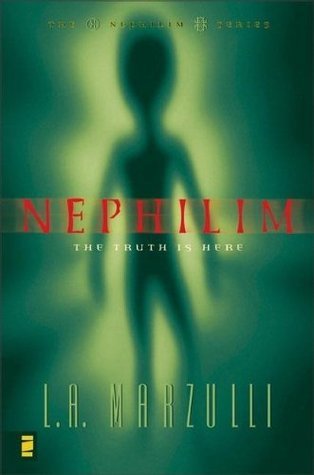
Nephilim by L.A. Marzulli, Book 1
Jim Marrs, David Flynn, and Tom Horn. But it was L.A. Marzulli’s Nephilim trilogy that really took me to the next level.
I began to realize that the ancient texts, including the Bible, don’t deny the existence of these beings. It calls them by different names.
If Spielberg’s movie is predictive programming, what is it predicting?
Forged in faith. Rooted in truth.
Contact
contact@ironremnant.com
© 2026 The Iron Remnant®. All rights reserved.

ABOUT
HOME
MEDIA
NAVIGATION