
What Quantum Biology Reveals About the Unseen Realm
Why emerging science is forcing us to rethink consciousness, instinct, and the nature of the unseen realm.
12/9/202511 min read
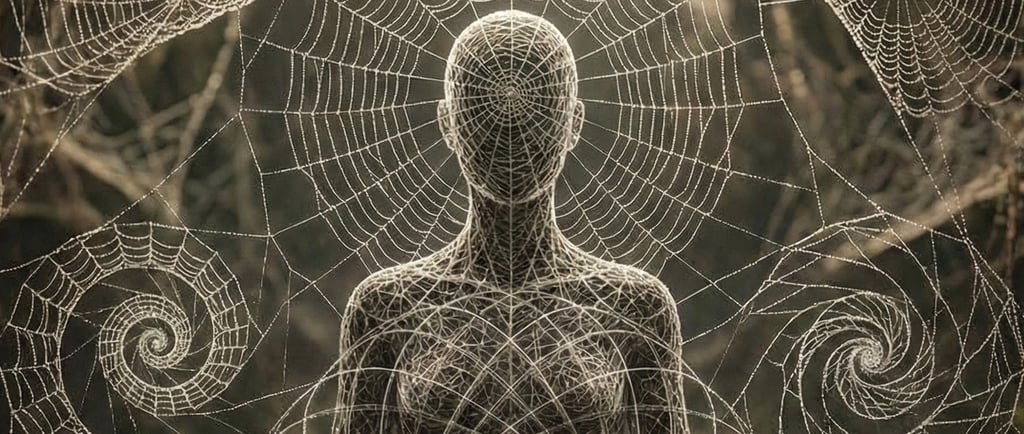
I am not a physicist or a theologian. I am not here as an expert with letters after my name. What I do is notice patterns, ask questions, and try to make sense of the world we actually live in.
And one question has stayed with me for years.
Did the microscopic world only begin to exist when we invented the microscope?
Of course not. It was there the entire time.
We simply lacked the tools to perceive it.
So if our inability to observe something has never defined its existence in the physical world, why do so many people turn around and use that argument against anything unseen or spiritual?
If we were wrong about the microscopic world for most of human history, what makes us so confident we have mapped out all the unseen layers now?
Our perception is narrow. Reality is not.
Human senses are shockingly limited.
We see only a tiny slice of the light spectrum.
Bees see ultraviolet patterns we cannot.
Snakes detect infrared heat signatures.
Birds navigate by magnetic fields that are completely invisible to us.
Nothing about this is “supernatural.” Biology simply tunes each creature’s perception to a different layer of the same reality.
If animals routinely experience worlds that overlap ours but are invisible to us, why do we act like our sensory limits define what is real?
Why dismiss the unseen realm simply because humans have not yet built instruments to measure it?
Tor Nørretranders, in The User Illusion, points out that our conscious mind is only a tiny trickle of the information our brain is processing. We are literally living inside a filtered version of reality.
So the question is not “Does the unseen exist?”
The question is “How much of the real world are we currently blind to?”
Why now? A new scientific paper and an old question about consciousness
Recently, a peer reviewed paper took a serious look at an idea that has been circling the scientific world for decades. The idea is simple to state but challenging to imagine.
Chemical polymorphs and a quiet mystery in matter
This is where Mike Adams enters my thought process. In his audiobook The Contagious Mind, he talks about something crystallographers like J. W. McCrone observed with polymorphs.
Certain chemicals can form more than one crystalline structure. That part is normal.
The strange part is what happens when a new crystalline form appears in one lab.
After that, other labs around the world start getting that same new form, sometimes even when they are trying to reproduce the old one that had been stable for years.
This has been documented with substances like xylitol, ampicillin, benzophenone, and ritonavir.
Once the new polymorph appears, the older form can become very difficult to recreate, even when everyone follows the same procedures they used successfully before.
Why does this happen?
There is no obvious signal being sent between labs.
No memo goes out that tells molecules how to behave.
Matter itself seems to begin “preferring” a new pattern.
That does not prove a consciousness field. I am not claiming that.
But it raises real questions:
How does a new molecular pattern become globally favored?
What guides those transitions?
Why does the shift propagate without direct communication?
If the physical world can synchronize behavior this way, it becomes a lot easier to at least consider that patterns in biology or even mind might also be tapping into something deeper than local chemistry.
This is the moment where chemistry starts behaving in a way that looks less like isolated cause and effect, and more like participation in a larger pattern.
Something is coordinating the shift, even if we have no instrumentation yet capable of measuring it.
Whether that mechanism is quantum, informational, or something we have not named, the effect is real enough that crystallographers have documented it for decades.
Instinct is not simple, and DNA may not be the whole story
We know genetics influences instinct, structure, and ability. I am not denying that part.
But some instinctual behaviors look more like access to a blueprint than a hardwired reflex.
A deeper pattern layer: morphic resonance and repeated ideas
Rupert Sheldrake uses the term morphic resonance to describe the idea that nature might contain pattern fields that living things tune into. You do not have to agree with his model to notice the patterns he is trying to explain.
Across species and contexts we see:
spiders repairing webs without ever being taught the structure
wasps reconstructing complex nests they have never seen before
ants rebuilding colony structures as if they have a shared template
monkeys on separated islands discovering the same food washing behavior around the same time
humans in different places, with no direct contact, inventing the same tools or equations nearly simultaneously
That does not automatically prove a shared consciousness field. It does suggest that information flows through reality in ways that do not fit a simple “genes plus environment” equation.
When you combine:
quantum weirdness in the brain
strange behavior in matter (polymorphs)
uncanny intelligence in instinct
repeated ideas surfacing globally
you start to see why so many people are rethinking the old assumption that consciousness is just a side effect of chemistry.
When Modern Patterns Echo Ancient Ideas
This is also where Clif High’s idea of the Aether becomes relevant. Before he ever talks about ancient civilizations or old gods, his starting point is simple. He argues that reality contains a deeper informational substrate, what he calls the Aether, and that physical matter ('Materia') is simply that same substrate condensed into a state of tension.
In his view, consciousness, instinct, innovation, and even certain physical processes might all be drawing from or interacting with this substrate.
You do not have to agree with his terminology to see that he is describing the same pattern that appears in microtubule research, morphic resonance, global pattern shifts, and instinctive intelligence.
Aether, in his usage, is not a gas or a mystical substance. It is a field of information from which the physical world emerges. A medium of pattern.
Once you understand this, the conversation pivots to the "Ancient Alien" question.
Ancient alien theory flattens categories the ancient world kept distinct
I respect Clif's intellect. He acknowledges the Elohim. He admits the "Watchers" and "Sons of God" in the texts are real. He just views them through a physics lens: he sees them as long-lived biological entities who mastered the Aether and possess technology that looks like magic.
And honestly? That description doesn't necessarily contradict the Bible.
We often use the word "spiritual" to mean "ghostly," but the biblical text blurs that line constantly. Angels ate meals with Abraham. Jesus had a physical body yet walked through locked doors. Perhaps the "spiritual realm" is just a layer of physics we haven't accessed yet.
But here is where the divergence happens.
Ancient Alien theory, and Clif’s specific interpretation, takes every powerful being and flattens them into one category. Yahweh, Baal, angels, and demons all become the same kind of thing: advanced physical entities with technology.
But the ancient Near Eastern world did not see it that way.
As John Walton and others have shown, those cultures already had a rich vocabulary for a layered unseen realm. They knew the universe was crowded. Michael Heiser captured the vital distinction with a simple line:
Religion can collapse without God collapsing
This is where a lot of people get triggered.
If new discoveries in consciousness or physics end up making institutional religion look outdated or shallow, I am completely fine with that.
A layered universe makes the ancient worldview more coherent, not less
Now put the pieces together.
If:
consciousness is not fully reducible to classical matter
quantum processes are involved in awareness
matter itself sometimes locks into new patterns globally
instinct looks like access to blueprints, not just reflex
information flows across nature in ways we do not fully understand
the universe appears crowded with non human intelligences
then the biblical worldview does not look primitive. It looks early.
The unseen world was not waiting for us to invent instruments
The microscope did not create microbes.
It simply revealed what had always been there.
In the same way, as science is forced to wrestle with consciousness, nonlocal effects, strange pattern behaviors in matter, and the limits of material explanations, it may not be opening a door into fantasy.
It may be circling back to what the ancient world already knew.
Whether we call the inhabitants of the unseen realm:
angels
aliens
elohim
watchers
higher intelligences
the labels are ours.
Reality does not bow to vocabulary.
The unseen world did not begin when we built the microscope.
We simply began to notice what had always been there.
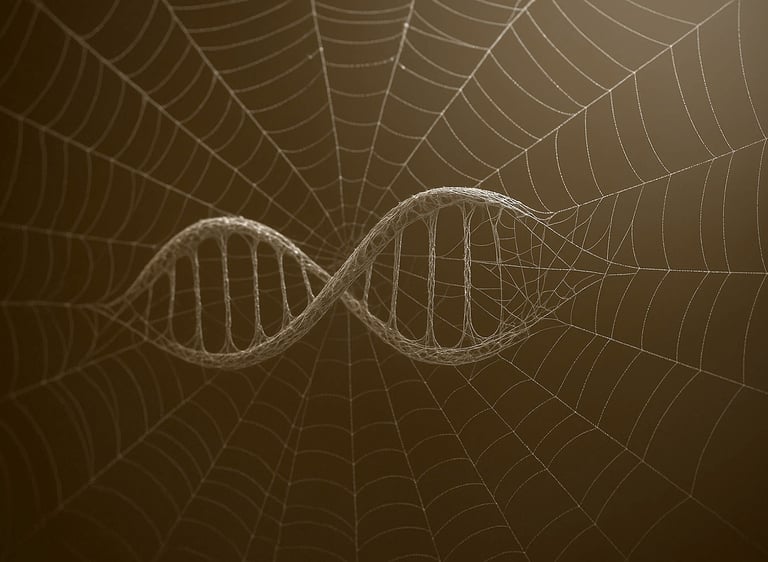
The spider web is the most obvious example.
Spiders do not go to school.
They do not watch their parents build.
There is no step by step lesson.
Yet from the beginning they spin webs that are:
structurally stable
geometrically coherent
functionally precise
Mike Adams talks about experiments where he damaged webs on purpose just to see what spiders would do.
What he observed looked less like blind reflex and more like awareness of the whole structure.
The spider:
recognizes missing anchor points
restores tension only where needed
rebuilds symmetry
produces the right kind of silk at the right time
avoids the sticky sections and walks only on safe spokes
It behaves as if it has a concept of the entire web, not just a list of tiny local rules.
DNA absolutely encodes abilities and tendencies. But does DNA alone encode:
geometric awareness
error detection
selective repair strategies
a full model of the structure?
Frans de Waal, in Are We Smart Enough to Know How Smart Animals Are?, shares countless examples where animals demonstrate complex, sometimes creative behavior that appears fully formed and not taught.
It is not crazy to ask whether instinct might be something like firmware running on biological hardware, with the blueprint itself anchored in a deeper layer of pattern in nature.
Not proven, but worth asking.
• Evidence of quantum coherence inside brain structures
Quantum coherence is when particles act in a coordinated way rather than as isolated units. This is common in quantum physics but unexpected inside warm, wet biology. If neurons show coherence, it hints that quantum effects might contribute to thought or awareness.
• Anesthetics interacting with quantum states
Most anesthetics work in ways that are not completely understood. The study showed that they interrupt quantum activity in microtubules, which suggests that consciousness might switch off when these quantum states break down.
• Measurable differences between conscious and unconscious brain states
The researchers found that the brain displays different quantum signatures when a person is awake compared to when they are unconscious. This is not just a chemical shift. It appears to be a deeper physical change.
None of this proves a universal mind or consciousness field. It does show that the inner workings of awareness might be far more complex than classical neuroscience ever assumed.
They did not claim proof of a “universal mind.” Their claim was more modest. Consciousness may not be fully explainable by classical chemistry alone.
This echoes what Roger Penrose has argued for years in The Emperor’s New Mind and Shadows of the Mind – that human consciousness does not fit neatly inside the box of classical computation and may require quantum processes to make sense.
Quantum behavior is non-local. It does not obey our normal intuition about cause and effect. Particles can be correlated across distance. Measurement changes outcomes. Observation matters.
If the brain is operating partly in that domain, it means consciousness is entangled with the deep structure of reality in ways the old mechanistic picture never allowed.
That does not prove a consciousness field.
It does force us to admit that the tidy “brain as a meat computer” model is breaking down.
Consciousness might not come only from chemical firing in the brain. It might also involve quantum activity happening inside tiny structural components of neurons called microtubules.
To test this, the researchers looked for several signatures that would suggest something deeper is going on. They reported three key findings.
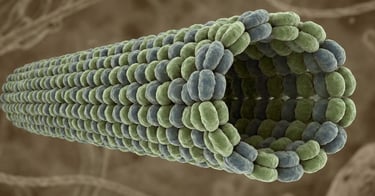
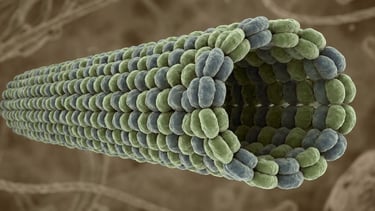
Inside the neuron: A microtubule structure, potentially acting as the quantum antenna for consciousness.
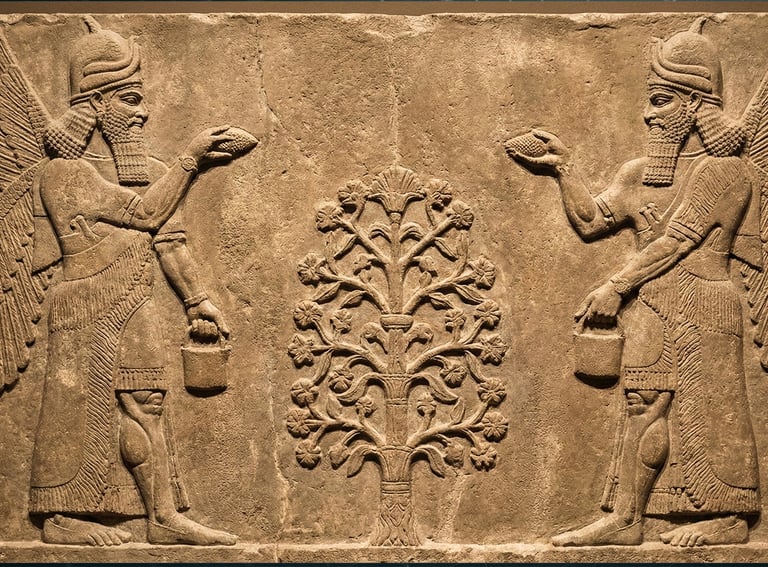
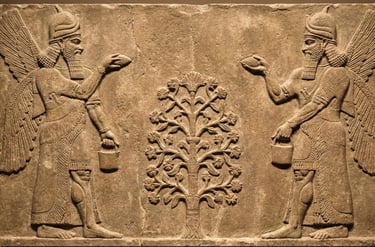
A populated unseen realm
spiritual hierarchies
loyal and fallen beings
watchers and councils
a Creator unlike the others
These ideas start to feel less like mythology and more like the first language humans used to describe a reality that is far more layered than they could quantify.
This does not make God smaller.
It removes the cartoon version that both angry atheists and shallow religion often trade on. The bearded man in the sky, the cosmic grandpa, the tribal mascot.
A formless, infinite Creator who transcends materiality is completely consistent with a reality where consciousness is fundamental and matter is derivative.
In that kind of universe, spiritual beings are created patterns within the system.
The Creator is the source of the system itself.
Religion, as a human structure, has often been a tool for control, identity, and power more than truth.
But the fact that humans have misused God’s name does not tell you anything about whether God exists.


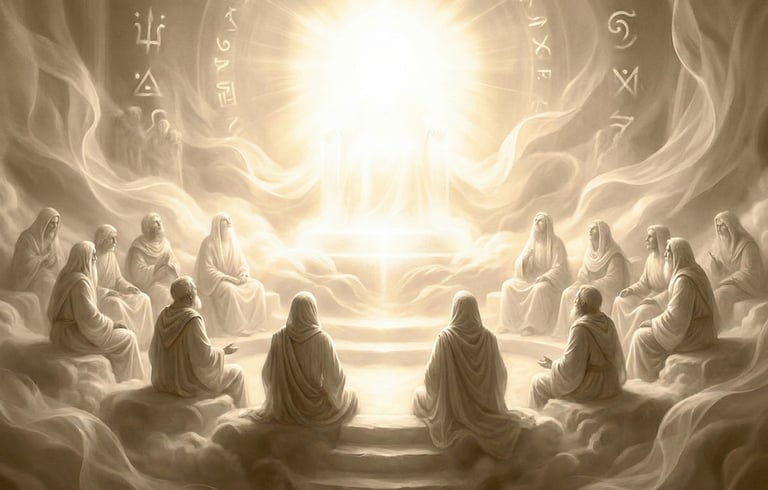
“Yahweh is an elohim. No other elohim is Yahweh.”
Elohim is not a name. It is a category word for a being who inhabits the spiritual realm.
Baal is an elohim.
Angels are elohim.
The Divine Council members are elohim.
Clif treats Yahweh as just another name on this list... a powerful, biological alien with an ego and a spaceship. But the biblical writers drew a sharp line around Yahweh.
Uncreated.
Not tied to territory.
The Source upon which every other elohim depends.
This brings us to the core misunderstanding. Clif actually agrees there is a Source; he calls it "Universe" (a formless consciousness). But he puts Yahweh in the "User" category, not the "Source" category.
Clif thinks Yahweh is a hacker. The Bible presents Him as the Architect.
Finding aliens, watchers, or interdimensional beings doesn't disprove the Biblical God. It simply confirms that the house the Architect built is populated.
Exactly what Scripture has claimed all along.
Recommended voices and resources
These are not gurus or authorities I blindly defer to. They are people whose work intersects with the patterns I am talking about. Use them as jumping off points, not final answers.
Biblical worldview and the unseen realm
The Unseen Realm (book* or documentary or conference) – Michael S. Heiser
The position that lays out the divine council, elohim, and the populated unseen realm in clear terms.Supernatural* – Michael S. Heiser
A shorter, more accessible version of The Unseen Realm.Angels: What the Bible Really Says About God’s Heavenly Host* – Michael S. Heiser
A deep dive into what Scripture actually says about angels compared to pop culture.Ancient Near Eastern Thought and the Old Testament* – John Walton
Background on how the ancient world thought about gods, realms, and cosmic order.Aliens and Demons (documentary)
A look at UFO and alien narratives through a biblical lens, asking whether some of these experiences overlap with spiritual deception.
Consciousness and mind science
A Contagious Mind – Mike Adams (free audiobook)
The work that got me thinking harder about pattern shifts in matter, spider webs, and the possibility of a shared informational substrate.Shadows of the Mind* – Roger Penrose
Continues and deepens his case that classical physics cannot fully account for consciousness.Quantum Enigma – Bruce Rosenblum and Fred Kuttner
Clear explanations of how quantum experiments force questions about the role of observation and mind.Irreducible Mind – Edward Kelly and colleagues
A large collection of research and cases that challenge the idea that mind is just what the brain does.The Quantum Activist (documentary)
Follows Amit Goswami as he argues that consciousness is fundamental to reality, not a side effect.What the Bleep Do We Know!?* (documentary or book)
A mix of narrative, animation, and interviews exploring quantum theory, consciousness, and reality.The Emperor’s New Mind* – Roger Penrose
Argues that human consciousness may involve non computable, possibly quantum, processes.
Pattern, memory, and morphic fields
A New Science of Life* – Rupert Sheldrake
Introduces the concept of morphic resonance and the idea that nature may have memory.Morphic Resonance and the Memory of Nature* – Rupert Sheldrake
Sheldrake reveals the nonmaterial connections that allow direct communication across time and space.Morphic Resonance and the Memory of Nature Lecture
Sheldrake explaining his ideas in a long form video presentation, helpful if you prefer watching over reading.
Instinct and animal intelligence
Are We Smart Enough to Know How Smart Animals Are?* – Frans de Waal
Case after case of animal intelligence that pushes the boundaries of what “instinct” can mean.Other Minds* – Peter Godfrey Smith
Explores octopus intelligence and what it suggests about mind and evolution.Super Smart Animals (BBC documentary)
Footage of animals solving problems, cooperating, and demonstrating surprising forms of awareness.
*Some links on this page are affiliate links. When you use them, you help strengthen and sustain our work at no extra cost to you.
Forged in faith. Rooted in truth.
Contact
contact@ironremnant.com
© 2026 The Iron Remnant®. All rights reserved.


ABOUT
HOME
MEDIA
NAVIGATION