
Why Do We Use AI?
AI turned lifelong ideas into reality, without the budgets or resources traditional filmmaking demands. Here’s why it became essential to The Iron Remnant.
11/30/20253 min read
First, the Facts:
AI is not magic. It does not have a mind of its own. It does not replace creativity, skill, or judgment. It simply speeds up and strengthens the process of creation.
Some people type a basic prompt and accept whatever it spits out. But if you are trying to make the image in your head appear on the screen, it can take hours of fighting with it, tweaking it, researching, and rebuilding. Each platform has strengths and weaknesses. Each one has its own quirks and prompt preferences. Figuring it all out is as challenging as it is mind-blowing. And it is wild to think that only a few years ago the biggest viral AI video was Will Smith eating spaghetti.
Pushback is predictable. I did it too. Then I tried it for myself and realized how wrong my assumptions were. And honestly, this is not the first time people have resisted a new tool.
I remember when Robert Rodriguez was ridiculed for shooting a feature film in HD because video was considered for television and commercials, while film was the badge of the big screen.
I remember when photographers swore digital would never replace film.
I remember when companies scoffed at the idea of needing a website.
I remember when Blockbuster refused to take Netflix seriously because they thought people only wanted new releases.
The pattern never changes. People mock the next thing, defend the old thing, then quietly switch once the world moves on.
What AI Actually Does for Me:
AI lets me explore ideas I never could have brought to life on my own. Before this, there was no version of reality where I could afford to make a music video with Vikings, fallen angels, or paper cut out animation. I was limited to whatever I could shoot on video or whatever I could scrape together to hire an animator. AI lets me bring concepts to life that would have stayed trapped in my head forever.
You could say it sparked a new wave of creativity, knowing that the only real limit now is my imagination. Before this, the ideas I had would have required production costs that were insane. And the technology is just getting started.
Costumes and wardrobe alone on some of these scenes would cost tens of thousands of dollars. That does not include casting, rehearsals, camera gear, lighting kits, travel, location fees, animals and trainers, costume designers, production designers, and everything else required to capture a single live action shot.
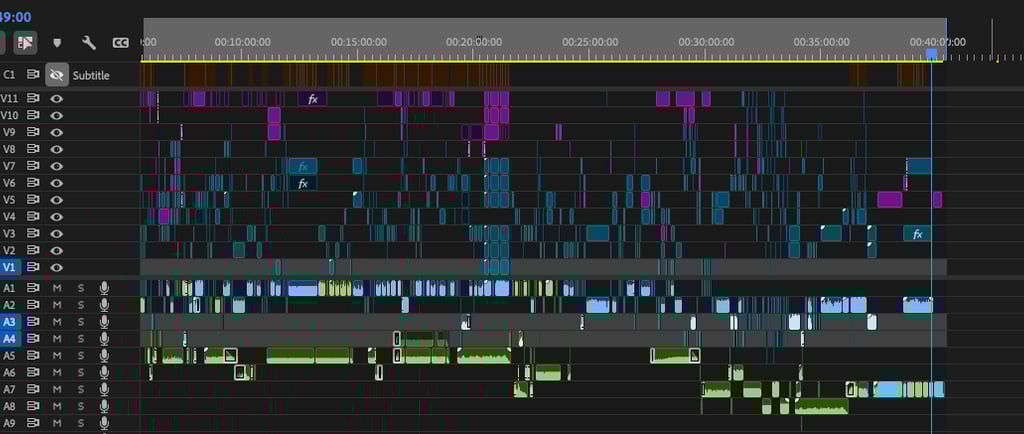
With AI, I can express my vision in a descriptive prompt and keep shaping it as I go. I can add, subtract, refine, or scrap an idea entirely and start fresh in minutes. Nothing about this is passive. Nothing is take whatever it gives me. It can take hours to create one solid storyboard and even longer to turn that into usable footage. And once that footage exists, I still cut it together using the skills I learned from more than a decade of editing network TV.
The same was true for music long before AI. I spent hours making beats on Xbox Music Mixer, arranging a tiny library of premade sounds into full songs. Then came GarageBand. A larger library with more flexibility. No one argued about those tools. They were just part of creating.
AI is the next step in that progression.
Why I Do Not Sit on the Sidelines:
Every generation of creators goes through this. Fear rises. Pride hardens. People cling to whatever tool makes them feel safe. Then the world moves anyway. They either adapt or get left behind.
I am not waiting for permission to build.
The Real Reason I Use AI:
People have claimed AI is demonic or lacks the Holy Spirit, but the tool only reflects what the creator puts into it. It is my responsibility to make sure my ideas are inspired by and filled with the Holy Spirit.
I have a vision for The Iron Remnant that spans music, imagery, story, theology, and worldbuilding. I do not have a studio budget or a team of fifty people. What I do have is imagination, divine inspiration, and a toolset that finally lets me express it.
Timeline for my 40 minute documentary, "WE ARE CHARLIE"
Forged in faith. Rooted in truth.
Contact
contact@ironremnant.com
© 2026 The Iron Remnant®. All rights reserved.

ABOUT
HOME
MEDIA
NAVIGATION