
Photographers Are Not Artists | The Iron Remnant
A look at how creative tools change, why resistance follows familiar patterns, and why this moment matters for the church.
12/18/20256 min read
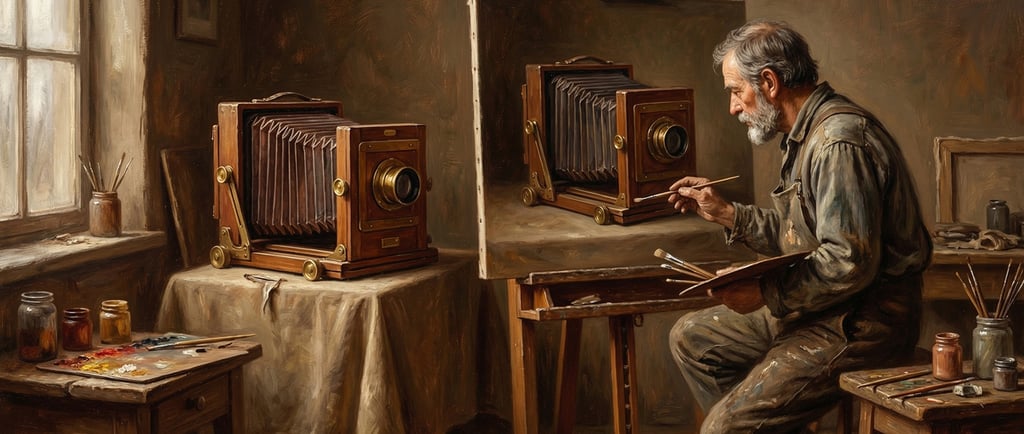
After publishing my earlier post about why I use AI, I kept hearing the same objections surface. Sometimes they were framed as ethical concerns. Sometimes as spiritual concerns. Sometimes as artistic ones. But underneath all of them was a familiar shape.
It did not feel new. It felt recycled.
Not the technology, but the reaction to it.
I have watched this pattern repeat long enough to recognize it. Every time a new tool shortens the distance between imagination and execution, the conversation follows the same arc. First comes dismissal. Then moral framing. Then fear about what will be lost. And eventually, quiet adoption once resistance becomes impractical.
You can see it clearly if you look at painting and photography.
For most of history, painters were not primarily celebrated for originality. They were hired for accuracy. Capturing a likeness mattered more than expressing an inner vision. When photography arrived, it did not just add another artistic option. It replaced an entire economic role almost overnight.
That reaction was not subtle, either.
When the daguerreotype was introduced in 1839, the French painter Paul Delaroche reportedly declared, “From today, painting is dead.” Others were even more dismissive. Charles Baudelaire later described photography as the “refuge of every would-be painter,” implying it was a consolation prize for those who lacked real artistic ability.
What is striking is not that they were wrong. It is how confident they were while being wrong.
Photography did not kill painting. It exposed what painting had been doing up to that point. Once a machine could handle pure realism, painters were forced to answer a deeper question. If accuracy was no longer the measure, then what was the point?
The answer reshaped art entirely.
A machine could now do the job faster, cheaper, and more consistently than a human who had spent years mastering the craft. The backlash was immediate. Photography was called mechanical, soulless, not worthy of being called art.
But what actually happened is more interesting. Painting did not disappear. It evolved.
Non-realistic and symbolic art had existed for centuries already. Religious icons, decorative traditions, and expressive distortion were never absent from human creativity. What changed was not the imagination of painters, but the function of painting.
Before photography, realism still mattered economically and culturally. If you wanted a likeness, a record of an event, or a visual memory, a painter was often your only option. Accurate representation was not just an artistic choice, it was a job. Painters were hired by kings, royalty, and noblemen to preserve faces, moments, and legacy.
Once photography arrived, that pressure lifted. Machines could now capture reality faster, cheaper, and more accurately than any human hand. Realism lost its monopoly, not because painters failed, but because the problem it solved no longer belonged to them.
That shift created space.
Freed from the obligation to document the world, painters leaned more fully into emotion, interpretation, symbolism, and inner experience. Art did not die. It became more consciously human. Less about copying what is seen, more about revealing how it is perceived.
That same reaction surfaced again when film photography gave way to digital. I remember photographers insisting digital would never replace film, that it removed discipline and intentionality. Today, no one seriously questions whether photography is art simply because a sensor captured the image instead of celluloid.
The argument keeps repeating because the underlying fear stays the same.
I see it in film as well. Quentin Tarantino has never hidden how he works. He openly lifts shots, scenes, framing, and structure from movies he loves. Sometimes the references are subtle. Sometimes they are nearly exact. And yet his work is not dismissed. It is studied.
Because we understand something important there, even if we do not always articulate it. Creativity is not about pretending you emerged in a vacuum. It is about how you recombine what you have absorbed into something that carries intention, voice, and meaning.
Music has always operated this way too. Genres exist because of shared structures. Chord progressions repeat. Rhythms echo across decades. Artists quote each other, borrow phrases, sample, remix, and respond. Learning from existing work has never been the disqualifier. Claiming something specific as your own without transformation has always been the line.
That is why the argument about AI “training” feels thin to me.
What people seem to be reacting to is not learning or influence. It is the collapse of friction. It is how quickly the gap between idea and execution is shrinking. When that happens, value shifts. Execution still matters, but judgment matters more. Taste matters more. Discernment matters more. Having something worth saying matters more.
Previous decades felt distinct with their own style, their own sound, their own pop culture because gatekeepers enforced cohesion. Once the internet broke that grip, culture fragmented into parallel streams. What looks like a mashup since 2005 is really decentralization.
That shift is unsettling, especially if your sense of value was tied to expensive tools and tough barriers of distribution, rather than the clarity of the vision behind it.
Signing with a record label used to be like a dream come true. Today, it often feels like a prison.
In my earlier post, I focused on what AI does for me practically. How it removes production barriers and lets me explore ideas that would have been impossible with my resources. What I did not say there, but feels important here, is that none of this started with AI.
The idea for The Iron Remnant did not come out of a trend cycle. The name, the domain, the vision, all of that was already in place back in late 2022. I knew the scale of what I wanted to build. Music, imagery, story, theology, world-building. I also knew I did not want to release a watered-down version of it just to say I launched something.
So I waited.
Not because I was unsure of the vision, but because the tools had not caught up to it yet. Doing this the way I imagined would have required a studio budget or a full team. That was never the point. Iron Remnant was always meant to be built from conviction, not compromise.
What AI changed was not my direction. It changed the feasibility.
It finally became possible for a single creator to work at the level of ideas, symbolism, and narrative without being crushed by logistics and cost. That alignment mattered. It still does.
This is why the resistance feels so familiar to me. I have seen this moment before, not just culturally, but personally. The vision comes first. The tools arrive later. And when they do, people argue about whether you should be allowed to use them instead of asking what you are actually trying to say.
I have watched this pattern play out inside the church as well. For most of my life, “Christian” music, film, and entertainment were almost synonymous with low production, weak storytelling, and safe imitation. Not because believers lacked talent or conviction, but because access was restricted. Creation required permission. Distribution required approval. Gatekeepers decided what was acceptable, marketable, and safe.
What changed was not theology. It was access.
When production tools became affordable and distribution moved online, creators no longer needed record labels or industry blessing to reach people. Quality rose because constraints fell. Christian music and media did not become relevant again because institutions led the way, but because individuals finally could.
That is why this moment matters.
AI has the potential to do the same thing again, but at a much deeper level. It removes cost barriers, technical bottlenecks, and institutional filters that have nothing to do with truth, beauty, or meaning. The danger is not the tool. The danger is hesitation. If fear replaces discernment, if finger wagging replaces courage, the moment will pass. Others will move faster. Others will define the space. And the conversation will continue without us.
None of this feels like the end of art to me. It feels like another transition point we have seen many times before.
The tools change. The arguments repeat. And the same question remains underneath all of it.
Did you create with intention.
Did you shape something deliberately.
Did you mean what you made.
That standard has not changed.
The real question is whether the church will recognize this moment… or be left behind again.
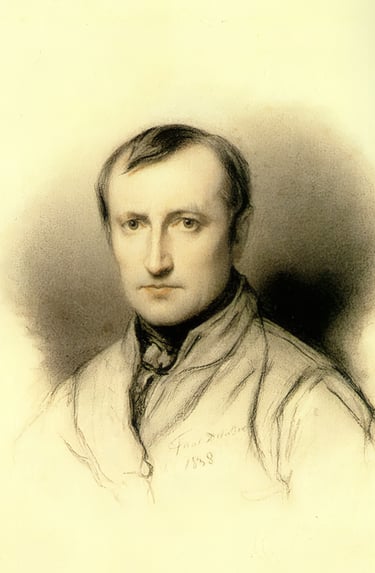
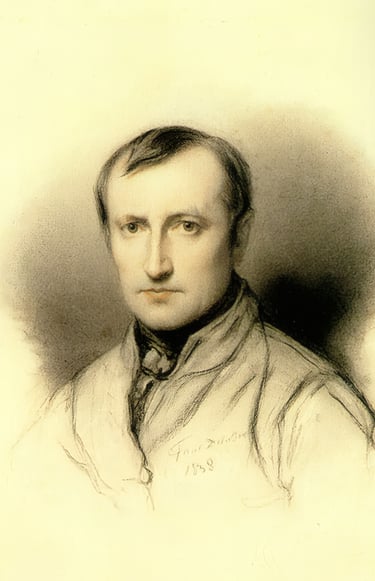
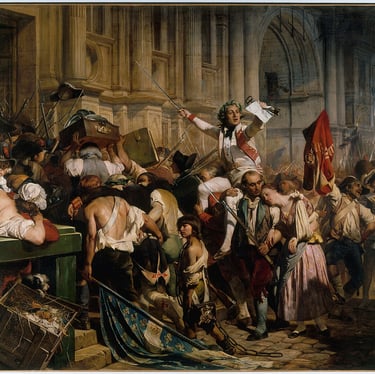

French painter Paul Delaroche (1797–1856) and his painting Vainqueurs de la Bastille (c. 1835), public domain
Forged in faith. Rooted in truth.
Contact
contact@ironremnant.com
© 2026 The Iron Remnant®. All rights reserved.
ABOUT
HOME
MEDIA
NAVIGATION